
Salmonella poisoning traced to backyard poultry has affected over 30 people in the past few weeks. While sick people ranged in age from 1-78, more than 40% were children younger than five. People with weakened immune systems, children, and older adults are more likely to get sick from Salmonella. 2025’s outbreak led to over 500 sicknesses including hospitalizations and deaths.
Backyard poultry includes not only chickens but also ducks, geese, turkey, and guineas. Most people associate Salmonella with consuming undercooked poultry, but simple contact with birds can also transmit the microorganism. Salmonella can be carried on the beaks, feet, and feathers of birds making it easily communicable.
The US Centers for Disease Control and Prevention interviewed sick people and reported 90% of those infected obtained their poultry since January. With baby chicks in local feed stores and backyard chicken-keeping continuing in popularity, it’s important to highlight basic biosecurity practices to follow at home.
Biosecurity practices can help prevent and reduce the risks of contracting Salmonella from backyard poultry.
The number one biosecurity practice is washing your hands with soap and water after you’ve handled poultry, their food, or any items in their environment.
Defend the Flock, the USDA’s program for promoting healthy poultry practices, also advises:
- cleaning and disinfecting tools and equipment
- wearing shoes or boots designated for the coop only
- limiting the number of people your flock encounters.
Other biosecurity practices shared by UF/IFAS Extension include
- weekly wash, rinse, and disinfect feeders and waterers
- purchase poultry from reputable hatcheries
- quarantine new birds for 2-3 weeks before adding them to your existing flock.
If you have questions about caring for backyard poultry or biosecurity, contact Dr. Julie P. Dillard at UF/IFAS Extension Washington County – 850-638-6180 or juliepd@ufl.edu.
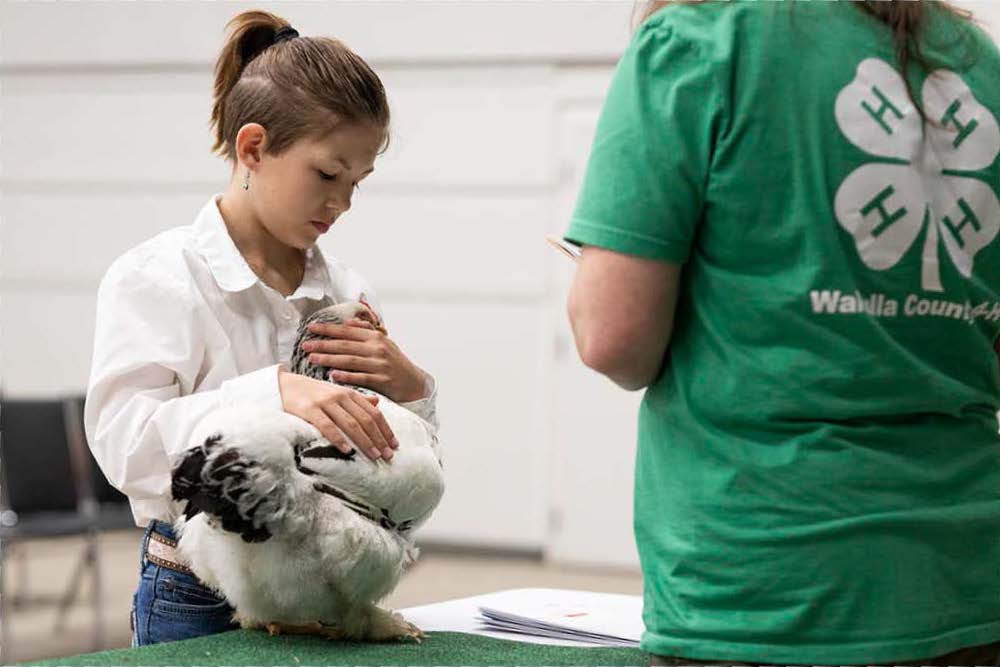 Marlee, a Washington County 4-Her, learned biosecurity basics through participating in the 4-H Panhandle Poultry Project.